From Capacity-Building to Systems Change:
What Will it Take for Shared Equity & Ownership Development in Detroit?
For years, community development organizations have been asked to do more with less. We’ve invested in technical assistance, leadership development, and organizational capacity. Those investments matter, and they should continue. AND, we also have to acknowledge that we cannot capacity-build our way out of structural barriers that were created by fragmented public systems and decades of disinvestment.
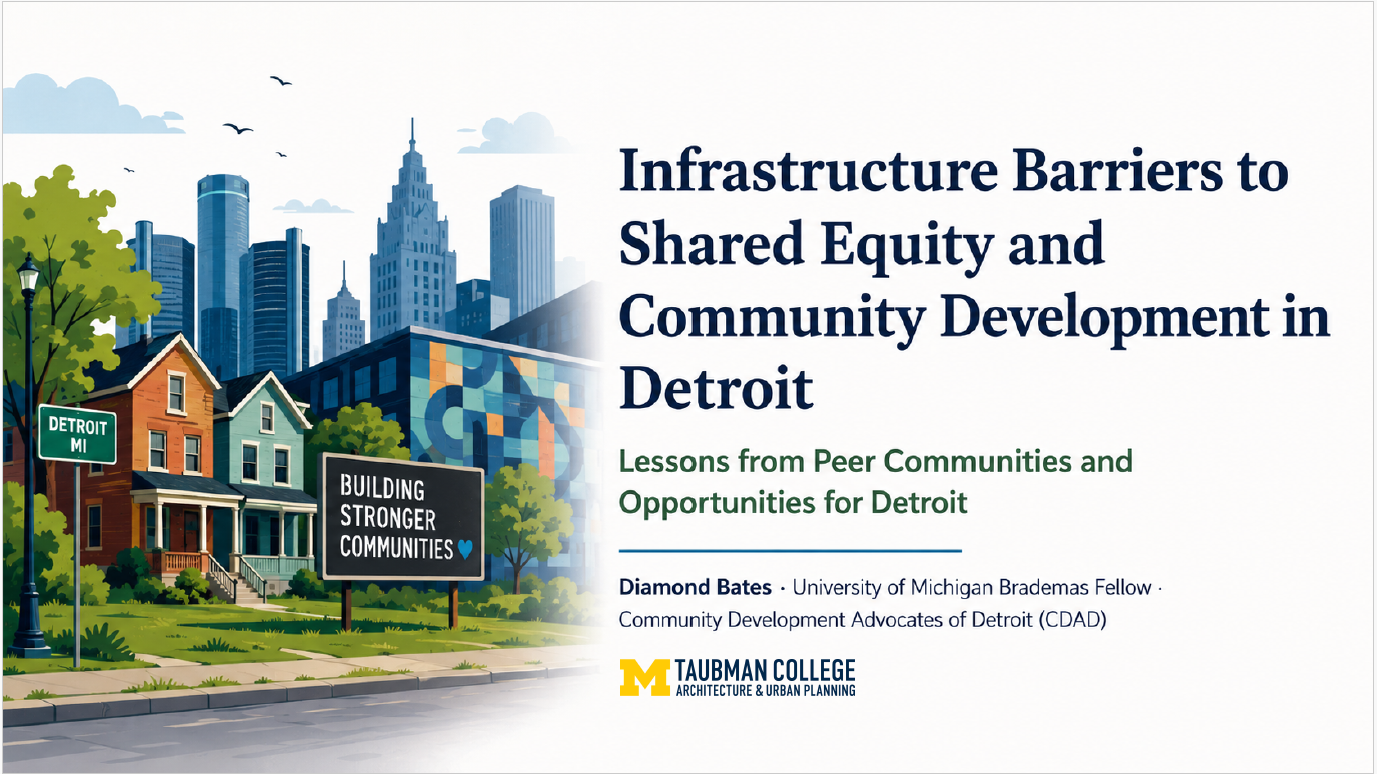
That was the core message during the Community Development Investment Roundtable Brownbag where University of Michigan Brademas Fellow with Community Development Advocates of Detroit (CDAD), Diamond Bates, presented on her summer report, Infrastructure Barriers to Shared Equity and Community Development in Detroit.
Bates’s research maps what it takes to make shared ownership models such as community land trusts, housing cooperatives, and other collective stewardship structures work at scale: coordinated infrastructure, reliable property data, and aligned public investment. In Detroit, developers instead hit buried utilities, scattered demolition and environmental records, and predevelopment costs that pile up before financing exists. The City of Detroit, its agencies, DTE Energy and the Detroit Land Bank often plan independently, and community organizations absorb the burden of coordination.
Bates proposes three staged opportunities: a Detroit Site Readiness Initiative to standardize property information, a Shared Infrastructure Partnership Pilot to distribute infrastructure costs across projects and neighborhoods, and an Infrastructure Coordination Review Process to align agencies early in the development timeline.
Her research treats infrastructure as a shared neighborhood investment, not a project-level line item. It’s a concrete model for integrated, agency-aligned planning, program and service delivery.
Follow the links to view the slides, read the report and watch the presentation.